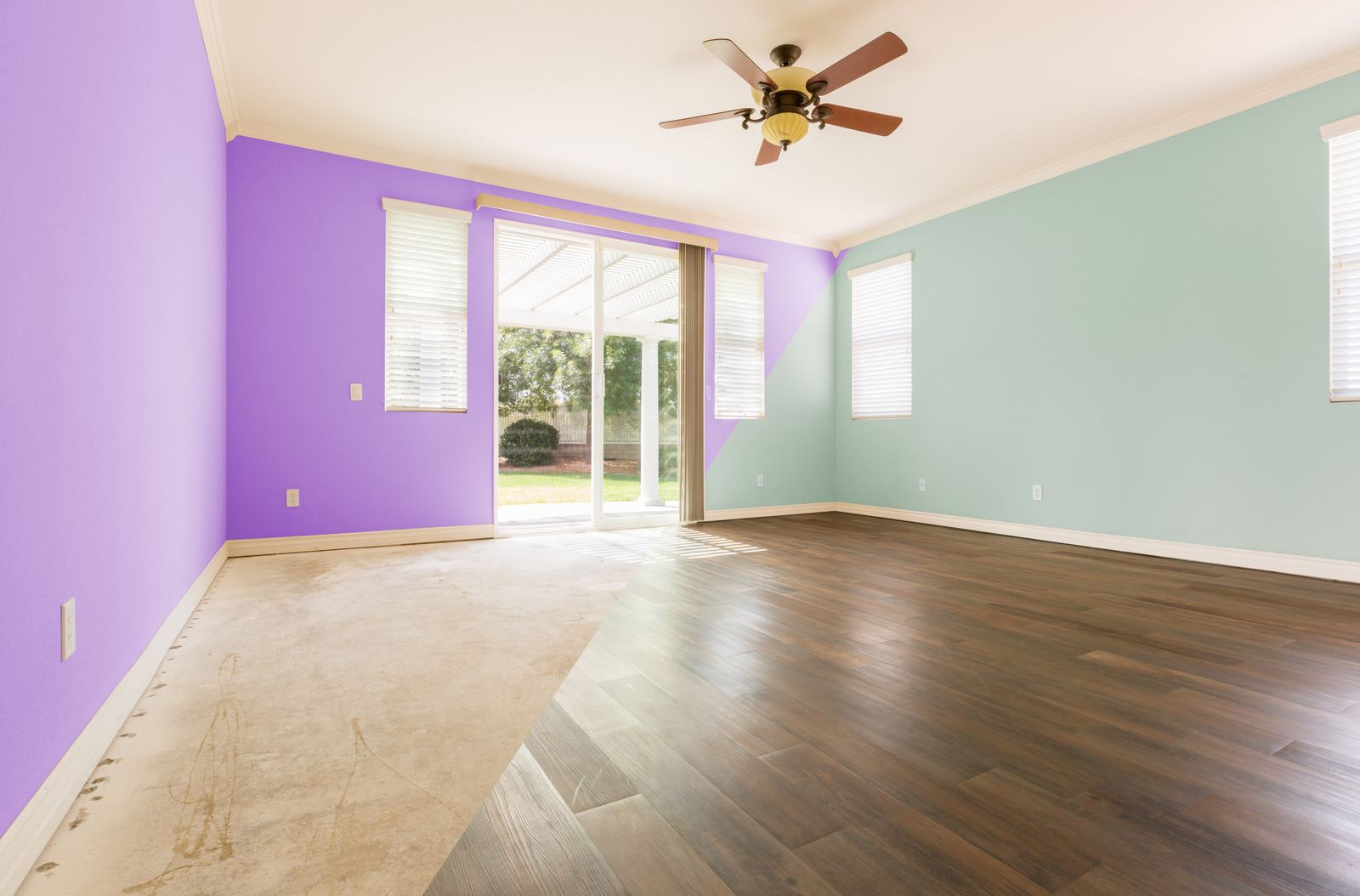
Refinishing an existing hardwood floor is the best value in flooring — a fraction of replacement cost for a nearly-new result. Which is exactly why you should be suspicious when it's the wrong call. Some floors are past sanding, and refinishing them wastes the money without fixing the problem. Here are the seven signs pros look for, so you recognize the honest recommendation when you hear it.
1. Boards are cupped or crowned across the room
Edges higher than centers (cupping) or centers higher than edges (crowning) means moisture imbalance between the top and bottom of the boards — a floor reacting to something below it. Sanding it flat while the moisture source remains locks the problem in and thins the boards; the next cycle has less wood to work with. Widespread cupping is a moisture diagnosis first and a flooring decision second.
2. The wear layer is used up
Solid hardwood refinishes 4–6 times in its life; every sanding removes wood. The tell: check board thickness at a floor vent or radiator pipe, and look for exposed nail heads or groove edges showing through. Engineered floors are stricter — the veneer wear layer is millimeters, and a floor that's had its one refinish may simply have nothing left to sand.
3. Movement underfoot
Bounce, soft spots, boards that flex when you cross them — that's the subfloor or joists talking, and no amount of surface finishing addresses it. Sometimes the fix is subfloor repair plus refinishing and the floor lives on; sometimes what's below requires the floor to come up anyway, which converts the decision to replacement automatically.
4. Water got in deep — black stains and buckling
Gray weathering sands out. Black staining means water reached the wood's cell structure and reacted with tannins — sanding rarely erases it fully, and boards that buckled off the subfloor are done. Isolated damage repairs board-by-board before a refinish; damage across a room is replacement talking.
5. Gaps that never close
Seasonal gaps that open in winter and close in summer are normal wood behavior. Gaps that stay open year-round — wide enough for a coin edge-on — mean the floor has permanently shrunk or the fastening has failed. Filler in a refinish handles small permanent gaps; a floor of them means the wood has moved past what finishing fixes.
6. Previous refinishes went wrong
Drum-sander waves, edger swirls under the stain, finish peeling in sheets from a contaminated coat — some floors carry damage from their last renovation. Skilled refinishers rescue many of these, but each rescue spends wear layer. A floor on its second bad refinish is often spending its last sanding on the repair, and an honest pro will say whether that's worth it.
7. The math stopped working
Refinishing wins on cost when the floor is fundamentally sound. Add board replacements across the room, subfloor repairs, moisture remediation, and stain-out-the-damage compromises, and the refinish quote can climb toward replacement money — for a floor that's still old underneath. When the repair list gets long, ask for both numbers side by side. Good pros volunteer them.
What the pro actually checks
A licensed pro's assessment takes minutes and beats guessing: board thickness at a vent, a moisture meter across the room (top and, where possible, underside), a straightedge for flatness, a walk for movement, and a look at what species and construction the floor actually is. That's the whole recommendation, built from evidence. Call (866) 849-1030 — FloorRelay connects you with a licensed local flooring pro free, and the refinish-or-replace answer comes from your floor, not a blog post's average.
Replace-or-refinish questions
Can I check my own floor's thickness?
Yes — pull a floor vent and look at the board cross-section. Solid ¾-inch stock with meat above the tongue refinishes; boards sanded near the tongue line are spending their last pass. It's the single most informative free check a homeowner can do.
My floor is engineered — is refinishing off the table?
Not automatically: 3mm+ wear layers take a careful professional refinish, 2mm takes a screen-and-recoat, thinner takes maintenance coats only. The product's spec (or a vent-check of the veneer) answers it. Screen-and-recoat is the underrated middle option for dull-but-sound engineered floors.
Is replacement ever cheaper than refinishing?
Occasionally — when repair lists run long, when the species is soft and damage-prone, or when the floor must come up anyway for subfloor work. That's why the honest assessment prices both paths. Any pro who quotes refinishing without checking thickness and moisture is quoting hope.
Get the refinish-or-replace verdict from a licensed pro
Free referral, evidence-based assessment, and both numbers side by side when it's close.
Call (866) 849-1030 now